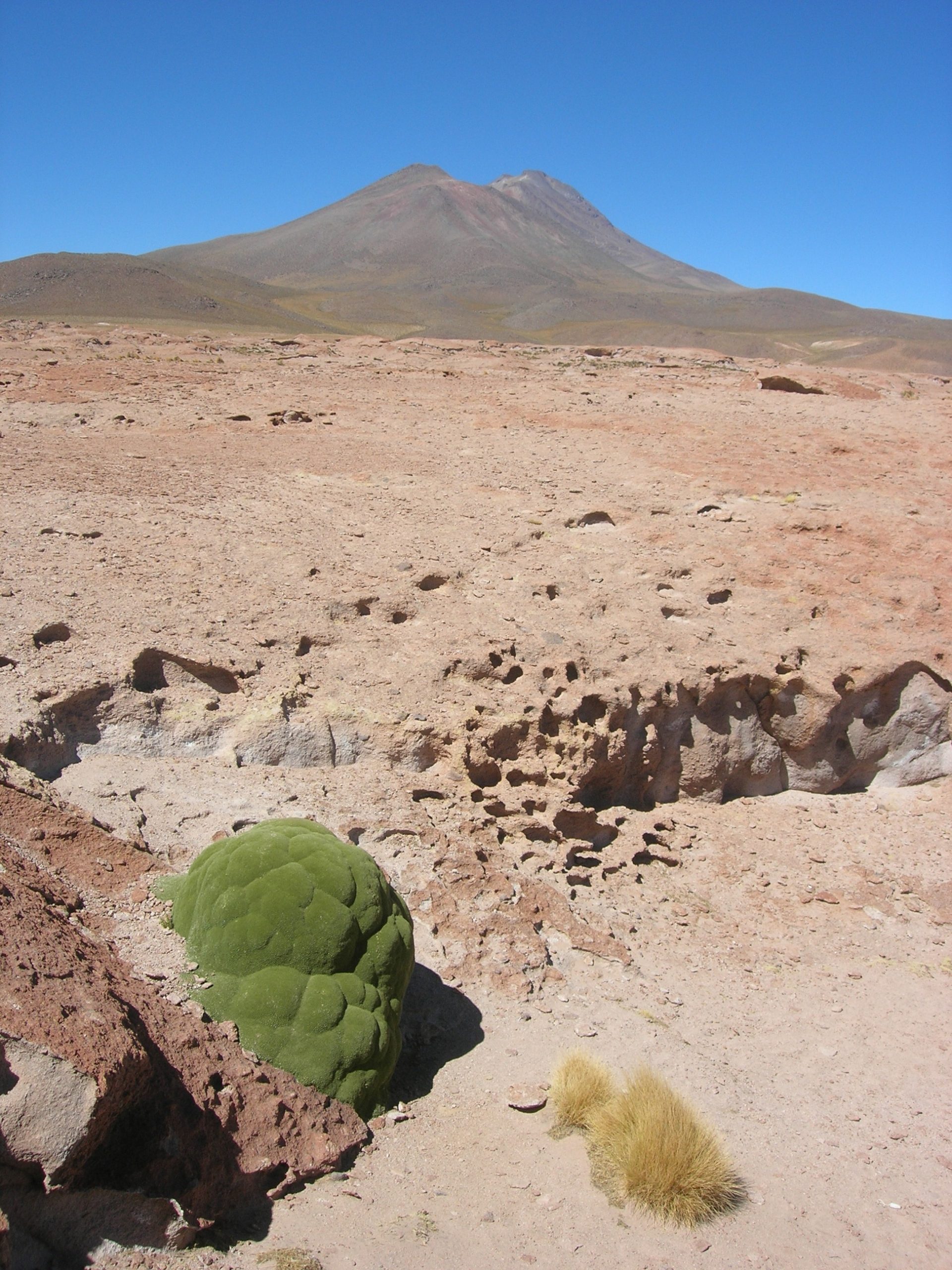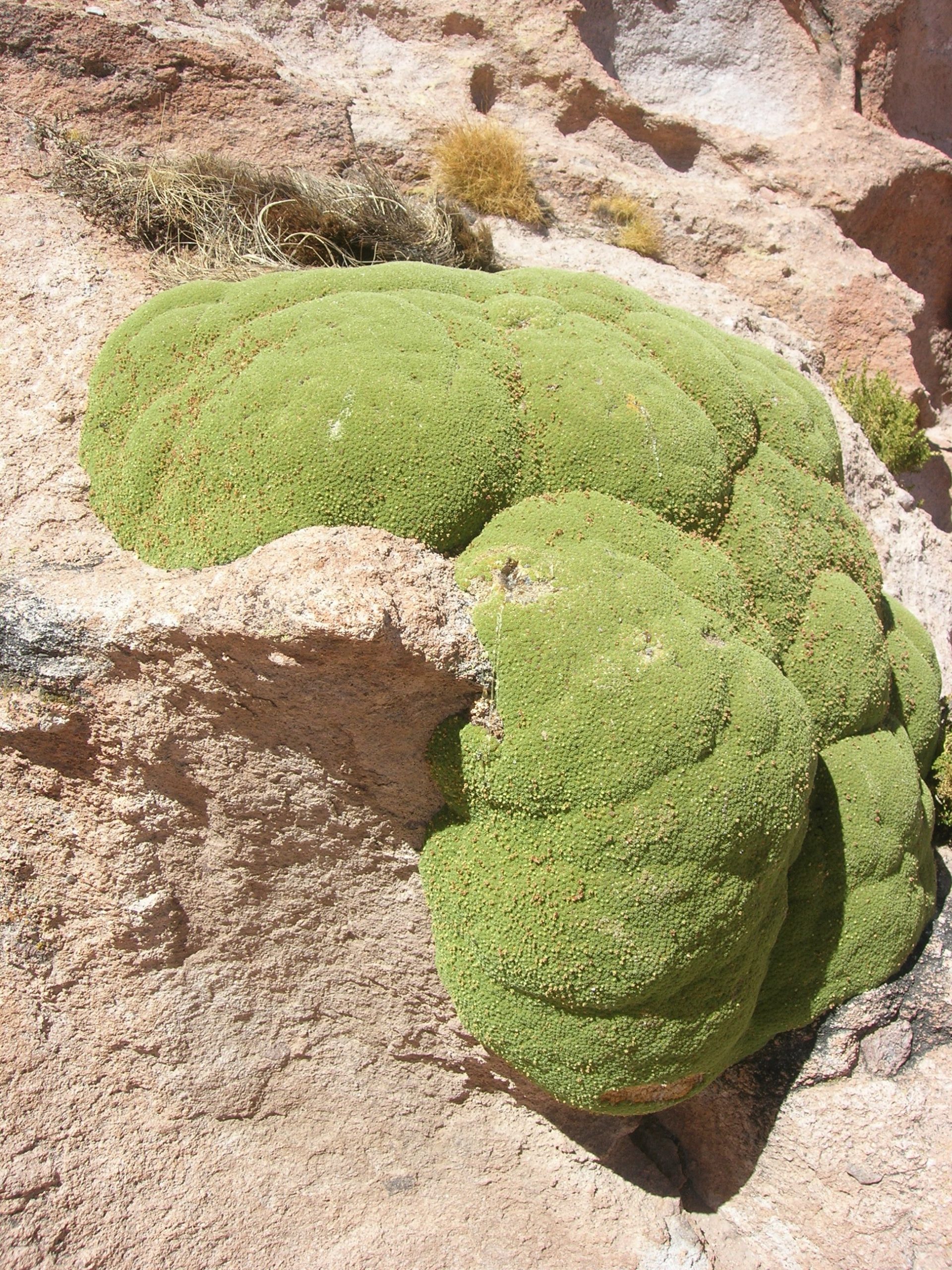
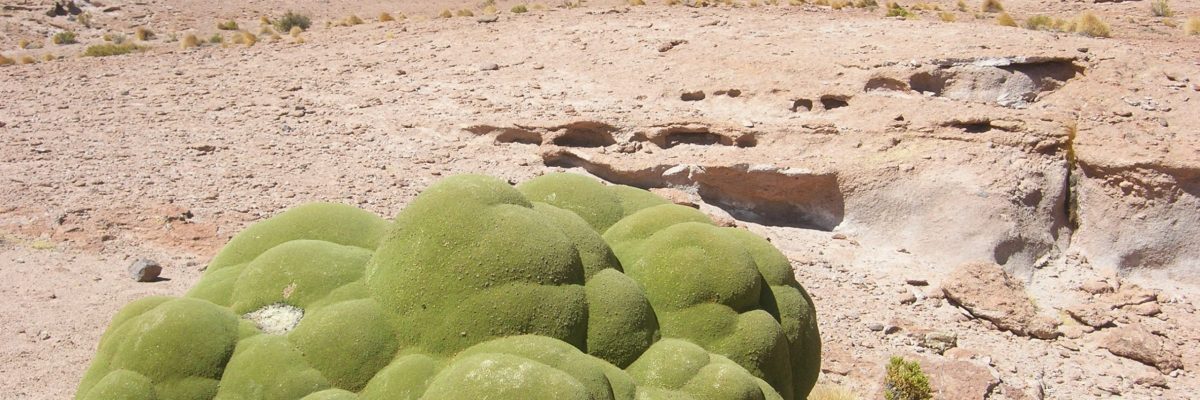
Yareta is a unique plant in the apiaceae family, endemic to the cold desert regions of South America (Bolivia, Peru and northern Chile). It grows at altitudes between 3500 and 5000 meters above sea level and looks like evergreen desert coral that develops on rocks, a large cushions, which can cover large surfaces. The plant loves dry areas and develops well in poor soil with almost no water and fertilizers. It has no problem with high insulation.
Its leaves are dense, thus preventing heat penetration and fluid loss. Its growth rate is very slow, and does not exceed 2 cm per year, so it can be assumed that individuals larger than a few meters in size are thousands of years old.
It is a special, rare and different plant, somewhat reminiscent of succulents (cacti). It can be viewed, among other places, in the Salar Deserts and the Rock Park in the Uyuni area of Bolivia, from where the following photos are taken.
Photos by Maor Kohn